2026-10-24 ·
Local Considerations for Insulating Milwaukie Homes Near Johnson Creek
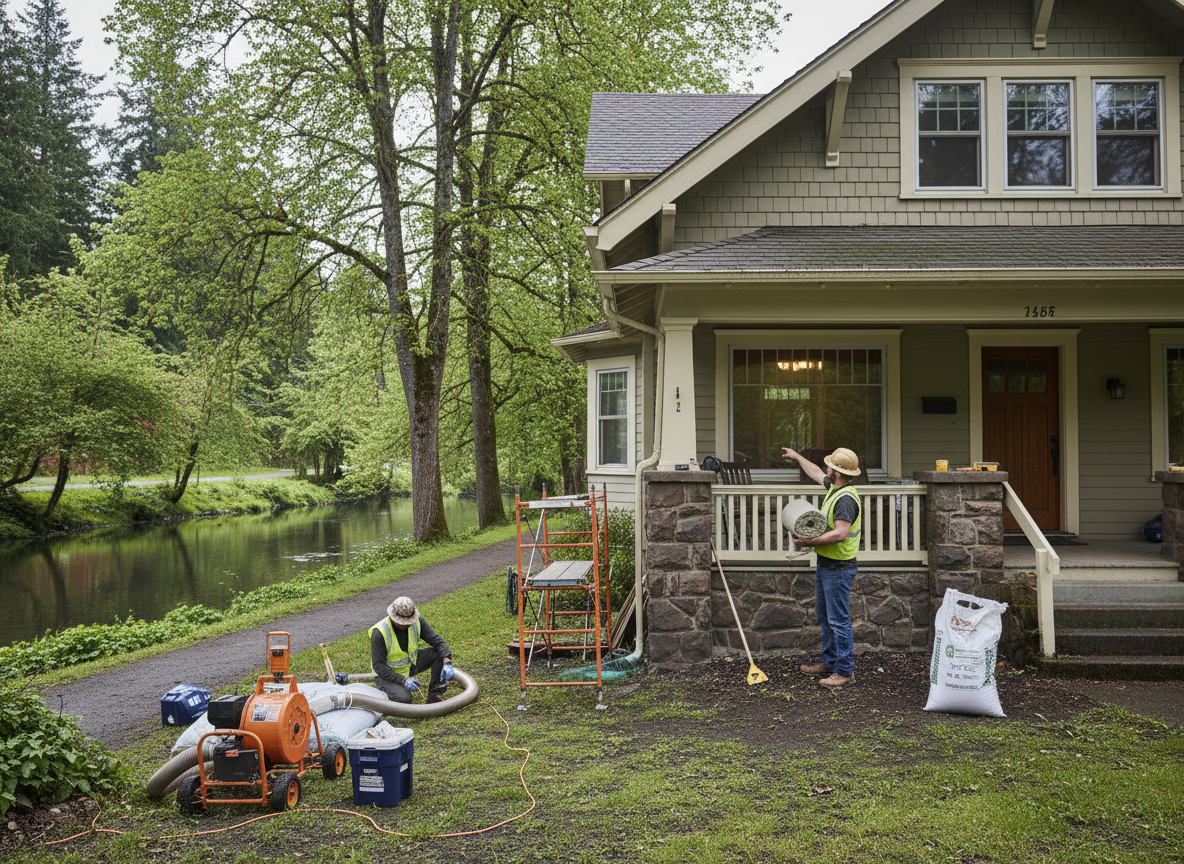
Homes near Johnson Creek in Milwaukie require insulation that prioritizes moisture resistance due to the creek's seasonal flooding and the region's mild wet winters combined with warm dry summers, which drive condensation cycles in older structures.
Moisture Risks Specific to Johnson Creek Proximity
Properties in Ardenwald and Island Station sit close enough to Johnson Creek that groundwater seepage and periodic high water tables affect foundations year-round. Wet winters increase relative humidity in crawl spaces, making standard fiberglass prone to mold while spray foam creates a sealed barrier that limits vapor drive. Homeowners in these zones often see insulation degradation within 8–12 years when materials lack proper vapor retarders. Crawl space insulation addresses the lowest points where creek moisture first enters wall cavities and floor joists.
Terrain slopes toward the Willamette River in Hector Campbell add drainage challenges that compound during heavy winter rains. Foam board or rockwool placed along foundation walls performs better here than cellulose because both resist saturation without losing R-value. Installation crews must verify soil moisture levels before sealing any envelope to avoid trapping water against rim joists.
Housing Stock and Age Factors in Downtown Milwaukie and Ardenwald
Many residences built before 1970 in Downtown Milwaukie and Ardenwald feature uninsulated crawl spaces and vented attics that allow creek humidity to circulate freely. These homes typically have 2x4 wall cavities and single-pane windows that lose heat quickly during the 40–50 degree winter nights common along the creek corridor. Adding wall insulation requires removing exterior siding or interior drywall, while attic work focuses on sealing around existing knob-and-tube wiring without disturbing historic elements near the Milwaukie Museum area.
Newer construction in the same neighborhoods often includes partial insulation that settled unevenly, creating cold spots above Johnson Creek flood plains. Blown-in cellulose can fill these voids when installed at the correct density, but crews must first confirm no active leaks from the creek's influence on nearby storm drains.
Climate-Driven Installation Timing and Material Selection
Mild wet winters make spring and early fall the practical windows for work because dry summers reduce ambient humidity and allow materials to cure properly. Best times of year to add insulation around Milwaukie without disrupting daily life outlines how crews schedule around the 60–70 degree days that minimize thermal shock to existing systems.
Spray foam and closed-cell products deliver the highest performance near Johnson Creek because they adhere directly to joists and resist the 70–80 percent winter humidity levels recorded along the waterway. Fiberglass batts remain an option only in dry attics away from the creek's immediate influence, where summer heat gain is the primary concern rather than moisture.
Practical Steps for Homeowners in Clackamas County
Residents should first map their property's distance to Johnson Creek using county flood maps before selecting insulation types. Checking for existing mold in basements and crawl spaces comes next, followed by confirming that any new material meets local vapor barrier requirements. Step-by-step guide to checking insulation levels in Milwaukie crawl spaces provides the inspection sequence that reveals whether current materials have already absorbed creek moisture.