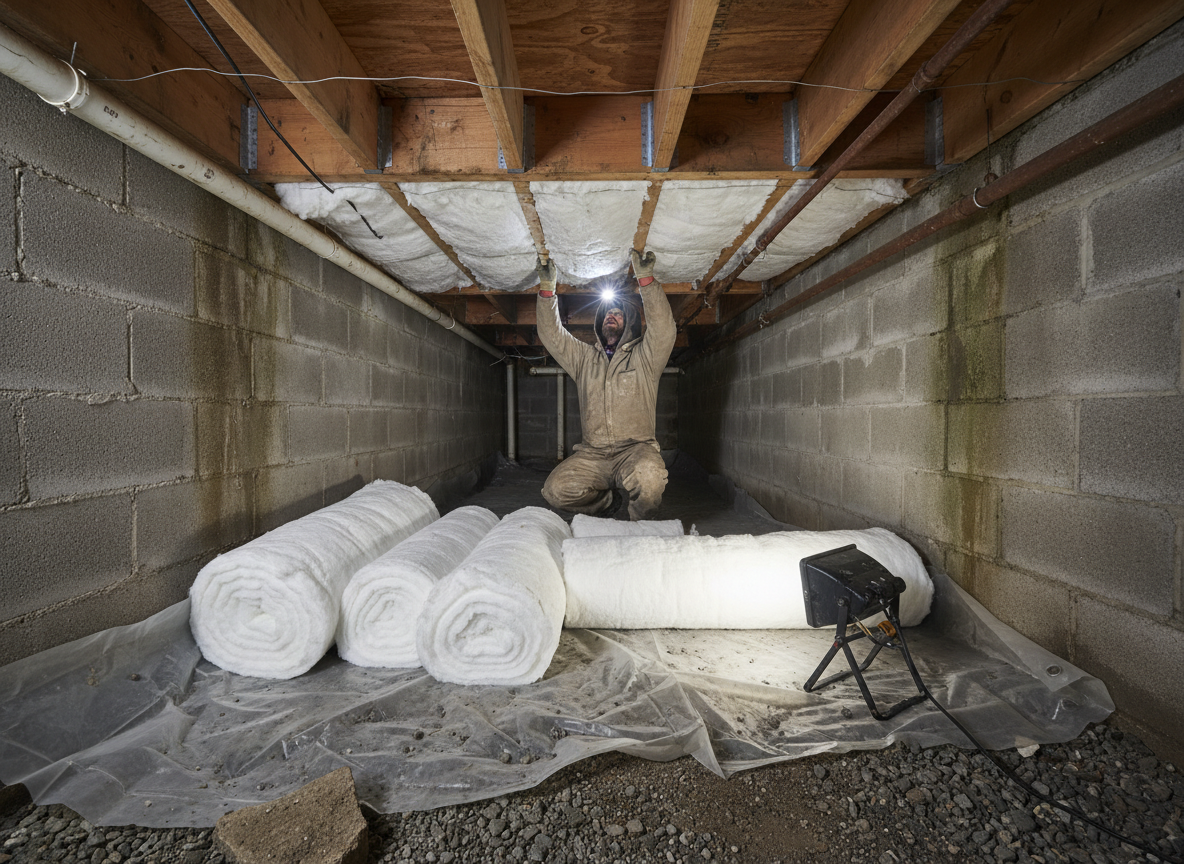
Milwaukie homes in neighborhoods like Ardenwald, Island Station, and Hector Campbell often sit on older foundations with dirt crawl spaces that pull in moisture from the nearby Willamette River. Mild wet winters keep relative humidity high for months, leading to condensation on floor joists and rim boards if the space is left uninsulated. We install closed-cell spray foam or rigid foam boards with sealed seams to create a thermal break and stop ground vapor from rising into living areas above. Proper detailing around plumbing penetrations and electrical runs prevents hidden gaps that allow air leakage in these river-adjacent lots.
Clackamas County building practices for homes built before the 1980s frequently left crawl spaces vented to the exterior, which works against local conditions once winter rains arrive. We convert these to conditioned crawl spaces by adding a sealed vapor barrier over the soil, insulating the rim and walls, and tying the space into the home’s conditioned envelope. This approach reduces wintertime heat loss through floors in Downtown Milwaukie properties and limits summer humidity spikes that can affect HVAC performance when warm dry air meets cooler ground temperatures.
Terrain near the river often means higher water tables and occasional seasonal seepage that standard fiberglass batts cannot handle. We use moisture-tolerant materials and ensure drainage paths remain clear before insulation goes in. Access limitations in tight Milwaukie crawl spaces require careful material staging from our base at 4560 SE International Way so crews can work efficiently without disturbing landscaping or driveways.
Code requirements in Clackamas County now emphasize continuous insulation and air sealing at the rim joist. We verify existing ventilation or plan mechanical ventilation when converting to a closed system so homeowners avoid trapped moisture that could affect wood framing over time.
Technician insight
In Milwaukie, the thing that catches most people out with crawl space insulation is the persistent ground moisture along the Willamette River in pre-1970 homes in Ardenwald and Island Station. Homeowners often try cheap batts only to watch them sag and mold within two winters because they never addressed the vapor drive from the soil.
Island Station Crawl Space Upgrade
A 1960s home near Milwaukie Riverfront Park showed persistent floor cold and musty air after heavy winter rains. We found saturated soil and missing insulation along the rim joist facing the river. We installed a sealed vapor barrier, closed-cell foam on the walls, and tied the space into the home’s ventilation. The homeowners reported drier air and warmer floors the following winter.
How it works
- 1
Site Assessment
Inspect the crawl space for moisture, insulation condition, and access points in Milwaukie homes.
- 2
Vapor Barrier Installation
Lay and seal a heavy-duty vapor barrier over the dirt floor to block ground moisture.
- 3
Insulation Application
Apply closed-cell foam or rigid boards to walls, rim joists, and floor structure.
- 4
Sealing and Ventilation
Seal all penetrations and set up mechanical ventilation if converting to a conditioned space.
Pricing
Cost depends on crawl space size, access difficulty, and whether a full conditioned-space conversion is needed; we provide upfront quotes after inspection.