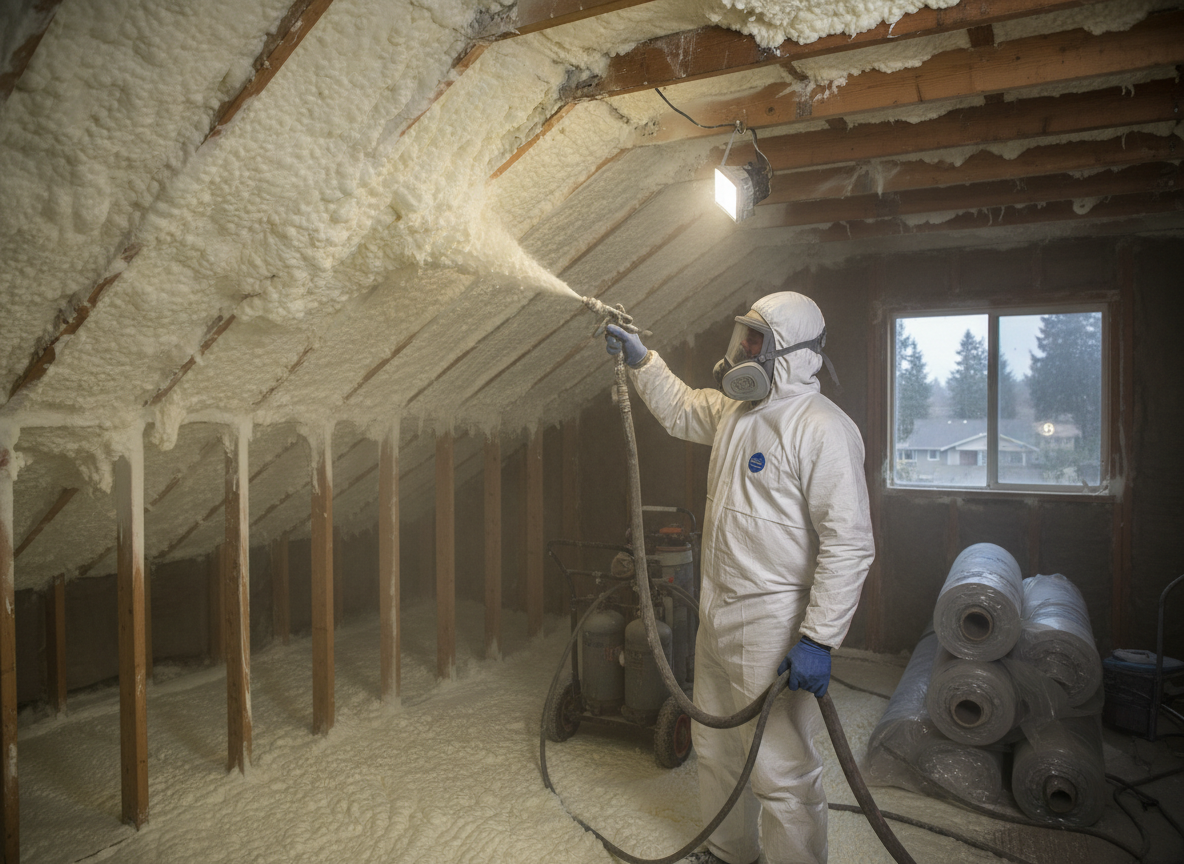
Spray foam insulation in Milwaukie requires careful material selection because of the region’s mild wet winters and warm dry summers. Closed-cell foam creates a moisture-resistant barrier that performs well in Clackamas County homes where attics and crawl spaces see frequent rain-driven humidity. Open-cell foam offers sound control and lower cost in interior walls but must be paired with proper vapor management in neighborhoods such as Ardenwald and Island Station, where many homes date from the mid-20th century and lack modern air sealing.
Older housing stock along the Willamette River corridor often contains knob-and-tube wiring or recessed lights that create fire and off-gassing risks during installation. Technicians at HeatShell Dynamics, based at 4560 SE International Way, Suite 100, routinely inspect these conditions before spraying and use ignition-barrier coatings where required by Oregon code. In Downtown Milwaukie and Hector Campbell, tight lot lines and steep driveways also limit equipment access, so crews stage rigs on the street and run longer hoses to reach upper floors without damaging landscaping.
Proper ventilation during and after application is essential. The 24/7 service window allows crews to begin work at dawn in summer when temperatures rise quickly, giving the foam time to cure before evening moisture returns. Homeowners in Portland-adjacent areas frequently request closed-cell foam under roof decks to reduce heat gain during dry summers while blocking winter condensation that can drip onto ceilings.
Moisture and Vapor Control in Wet Winters
Spray foam must address the constant moisture load from Milwaukie’s rainy season. Closed-cell formulations are preferred in crawl spaces near the river because they resist water absorption that would otherwise degrade fiberglass batts. Technicians check for existing mold in Island Station basements before sealing, since trapped moisture behind new foam can lead to structural issues years later.
Access Challenges on Older Lots
Narrow driveways and mature trees in Ardenwald and Hector Campbell limit truck positioning. Crews often use 200-foot hose runs and portable generators, adding time but preserving the property. Pre-job walkthroughs identify these constraints so pricing reflects actual labor rather than square footage alone.
Technician insight
In Milwaukie, the thing that catches most people out with spray foam insulation is how quickly moisture moves through older crawl spaces near the Willamette River during wet winters. Many homes in Ardenwald still have dirt floors and no vapor barrier, so closed-cell foam applied without first addressing standing water will trap humidity against joists and create rot within a few seasons.
Crawl Space Upgrade in Island Station
Water was wicking up through the dirt floor of a 1940s home two blocks from Milwaukie Riverfront Park. We found mold on the rim joists and no existing insulation. After installing a sealed vapor barrier and closed-cell spray foam on the underside of the floor, the homeowner reported stable temperatures and no more musty air in the living space above.
How it works
- 1
Site Assessment
Inspect attic, walls, and crawl space for wiring, moisture, and access points in the specific Milwaukie neighborhood.
- 2
Material Selection
Choose closed-cell or open-cell foam based on exposure to Willamette River humidity and Oregon energy code requirements.
- 3
Preparation
Mask fixtures, provide ventilation, and stage equipment considering narrow streets in Downtown Milwaukie or Ardenwald.
- 4
Application
Spray in controlled passes, monitoring thickness and temperature as weather shifts from cool mornings to warmer afternoons.
- 5
Final Inspection
Check cure, trim excess, and verify no gaps remain around penetrations common in older Clackamas County homes.
Pricing
Cost depends on square footage, foam type, and access difficulty in older Milwaukie homes; call for a site visit.