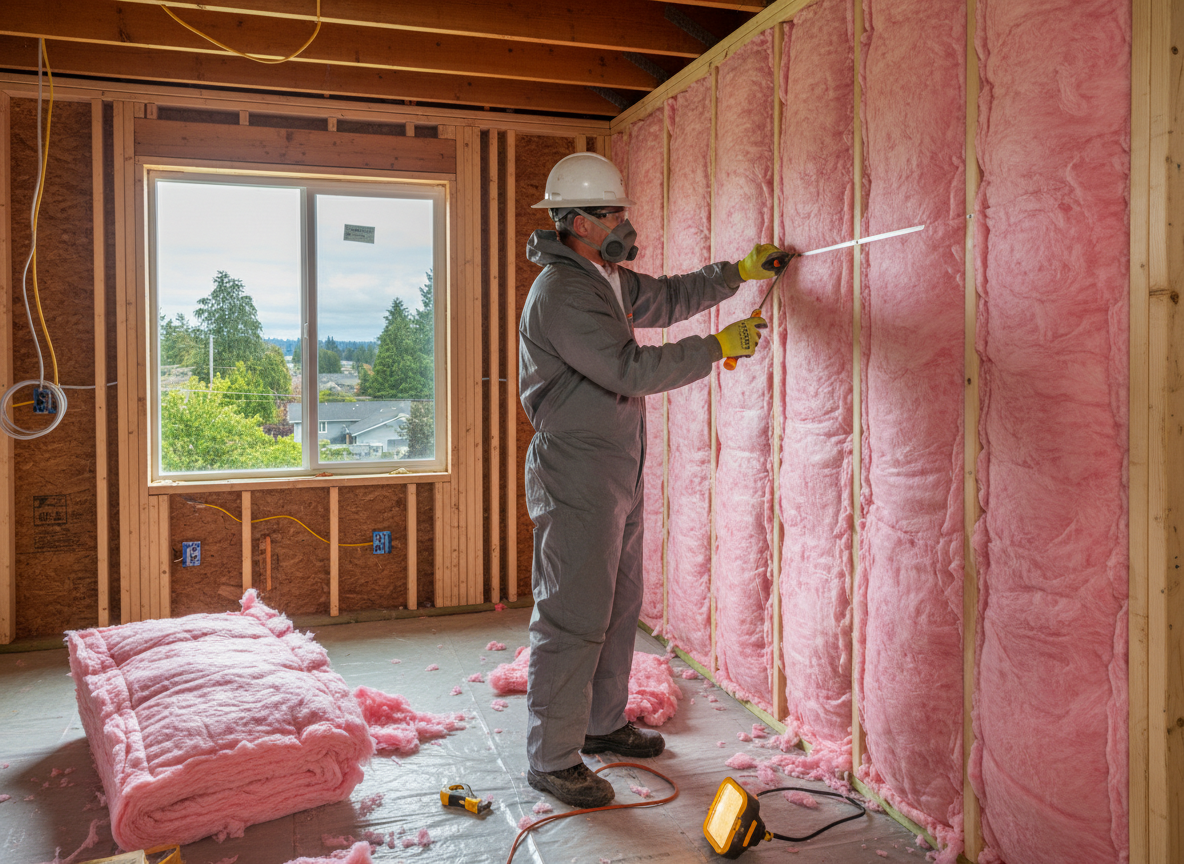
Fiberglass insulation comes in batts and blown forms suited to Milwaukie’s mix of mid-century homes in neighborhoods like Ardenwald and Hector Campbell. In Clackamas County, many houses built before 1970 have thin or missing insulation in attics and walls, allowing heat loss during mild wet winters when temperatures hover near freezing and rain persists for weeks. Proper R-value selection matters because over-compressing batts reduces performance, while blown fiberglass fills irregular cavities common in older framing. Installers must check for existing moisture near the Willamette River before adding material, since trapped dampness leads to mold that fiberglass itself does not cause but can worsen if vapor barriers are omitted.
Edge cases appear often in Downtown Milwaukie and Island Station where river proximity raises humidity. Fiberglass performs well in attics when paired with ridge and soffit vents, yet requires careful baffles to maintain airflow during warm dry summers when attics can exceed 120 degrees. Oregon energy code in Clackamas County now calls for higher R-values in retrofits, so crews verify existing depth before adding layers. Homeowners sometimes attempt DIY batt installation only to leave gaps around wiring and plumbing, creating cold spots that show up on winter energy bills. Professional crews use infrared scans to locate these voids before sealing.
Warnings center on handling and moisture. Fiberglass irritates skin and lungs during install, so full PPE is required in tight crawlspaces typical of Milwaukie’s older stock. In wet winters, any roof leak must be fixed first because waterlogged fiberglass loses all insulating value and promotes rot in floor joists. Crews also confirm that bathroom and kitchen exhaust fans vent outside rather than into attics, a common mistake in Ardenwald homes that turns fiberglass into a moisture sponge over time.
Technician insight
In Milwaukie, the thing that catches most people out with fiberglass insulation is skipping a moisture check in homes built before 1970 along the Willamette River. Ardenwald and Island Station houses often have roof leaks that go unnoticed until wet winters soak the new fiberglass, turning an energy upgrade into a mold problem inside six months.
Ardenwald Attic Moisture Job
Homeowner reported high winter heating bills in a 1960s house near Ardenwald. Inspection found old fiberglass saturated from a slow roof leak common in river-adjacent homes. Crew removed wet material, repaired the leak, added new fiberglass batts with proper baffles, and restored attic ventilation. Heating costs dropped and no further moisture issues appeared the following wet season.
How it works
- 1
Site Assessment
Inspect attic, walls, and crawlspaces in the specific Milwaukie neighborhood, checking for moisture, existing insulation depth, and ventilation paths.
- 2
Moisture Correction
Address any leaks or poor venting near the Willamette River before insulation work begins to prevent future mold issues.
- 3
Material Placement
Install fiberglass batts or blown material to target R-values while maintaining airflow baffles suited to Clackamas County’s wet winters.
- 4
Final Sealing and Verification
Seal gaps around penetrations and confirm even coverage with a walkthrough inspection.
Pricing
Upfront quotes after on-site inspection account for access difficulty and square footage in older Milwaukie homes.