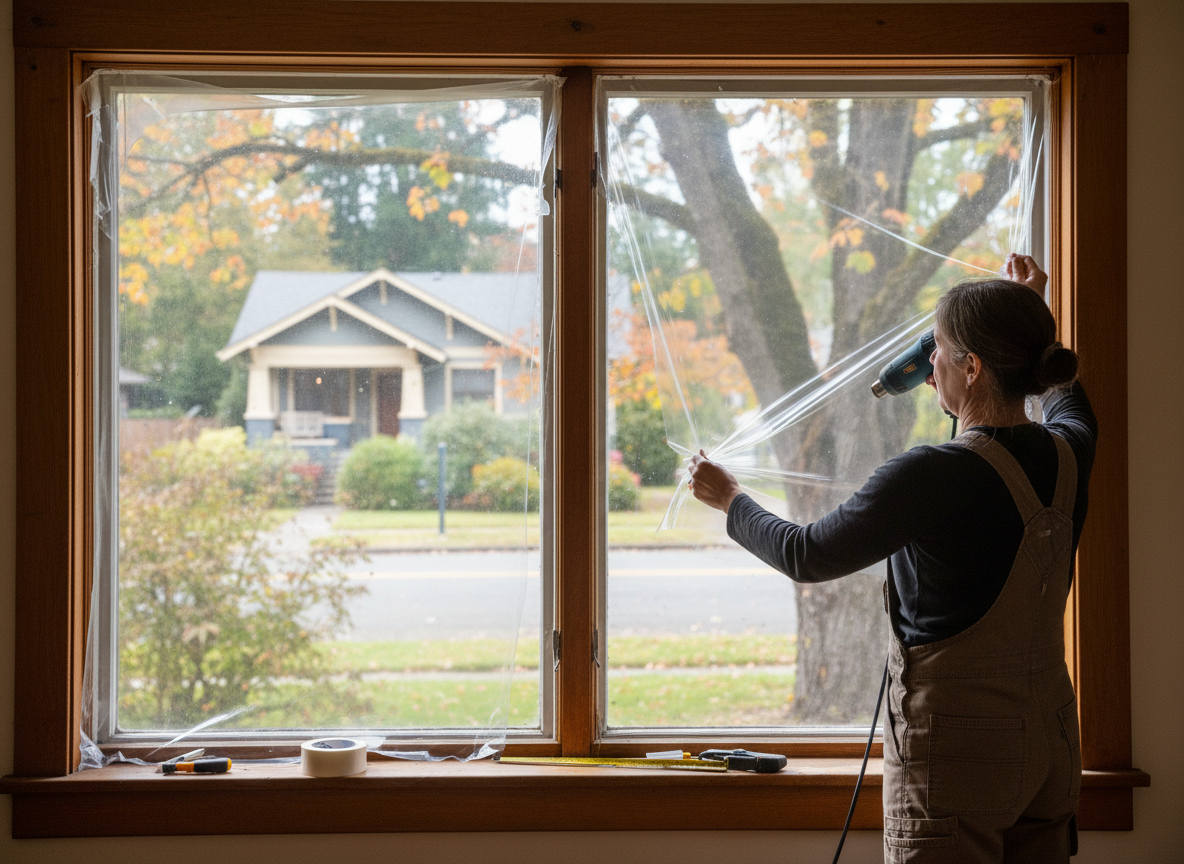
Homes in neighborhoods such as Ardenwald and Hector Campbell often feature single-pane or early double-pane windows installed decades ago. These units allow significant air leakage when mild wet winters bring persistent moisture and temperature swings. Proper window insulation starts with checking sash fit, glazing compound condition, and frame settling that occurs on the sloped lots common near the Willamette River. Materials must resist condensation without trapping moisture against wood frames that already face seasonal humidity.
Island Station and Downtown Milwaukie properties sit close to Portland’s urban edge, where wind funnels along the river corridor. This creates edge-case leaks at meeting rails and pulley holes that standard weatherstripping misses. We use compression bulb seals sized for original sash depths and low-E films applied to interior glass only when exterior storms are present. Code notes in Clackamas County require that any added films or inserts maintain egress function on bedrooms, a detail frequently overlooked during quick retrofits.
Warm dry summers reduce immediate urgency but highlight solar gain through south-facing windows. Reflective films or cellular shades installed now prevent summer overheating without interfering with winter performance. Homeowners sometimes attempt DIY tape or plastic kits that fail within one wet season because they ignore frame expansion. We verify each opening for rot at the sill before sealing, since river-adjacent soil moisture accelerates decay in older Clackamas County construction.
Technician insight
In Milwaukie, the thing that catches most people out with window insulation is how the wet winters drive hidden rot at sills in pre-1960 homes along the Willamette River. Homeowners in Island Station often tape over gaps without checking the wood first, then the new seals trap moisture and accelerate decay. We always pull the interior stops and inspect the pocket before any work starts.
Riverfront Home Window Drafts
A homeowner in Island Station reported high heating use and visible condensation on north-facing windows. Inspection showed deteriorated glazing compound and gaps at the meeting rails from frame settling near the Willamette. We replaced the compound, installed compression bulb seals sized for the original sash, and added low-E film to the interior glass. Condensation stopped and drafts were eliminated without altering egress hardware.
How it works
- 1
On-Site Window Survey
Measure every operable and fixed unit, note sash type, and check for existing storms or screens while documenting river-facing exposure.
- 2
Material Selection
Match weatherstripping profiles, films, or inserts to the exact frame depth and glass condition found in that Milwaukie home.
- 3
Preparation and Installation
Clean channels, replace deteriorated glazing points, then install chosen seals or films without blocking hardware or egress paths.
- 4
Final Air-Seal Check
Use a smoke pencil at each window under negative pressure to confirm leakage reduction before leaving the site.
Pricing
Upfront quotes are given after the window survey; cost depends on number of openings, sash condition, and chosen materials.