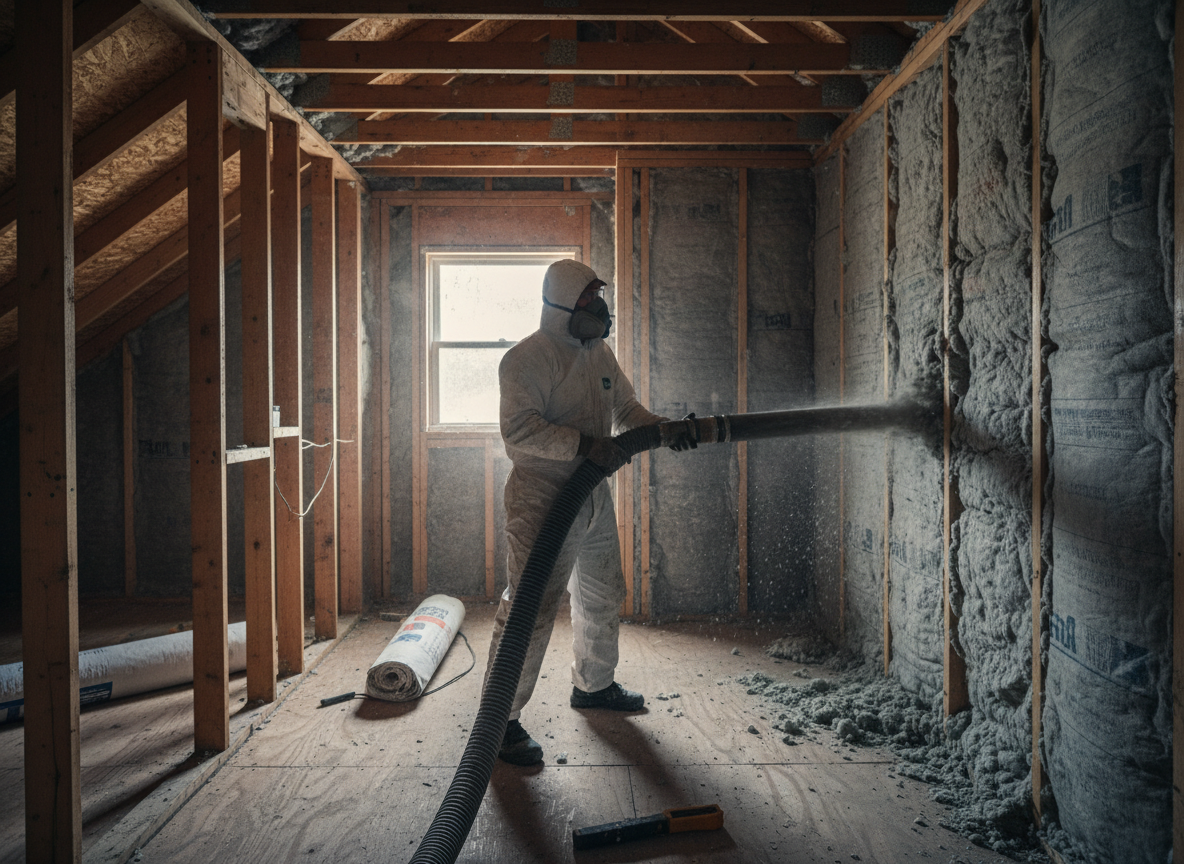
Older homes in Downtown Milwaukie and Ardenwald often feature plaster walls over lath with minimal original insulation, allowing cold air infiltration during the region's mild but persistent wet winters. Proper wall insulation here requires dense-pack cellulose or mineral wool to fill cavities without settling, while accounting for the proximity to the Willamette River that raises humidity levels in Island Station and Hector Campbell. Crews must inspect for hidden knob-and-tube wiring common in pre-1950 Clackamas County stock before proceeding, as disturbing it triggers code updates under Oregon residential standards.
Warm dry summers in Milwaukie create different demands, where wall insulation must prevent heat gain without trapping residual moisture from earlier rains. Homes near Milwaukie Riverfront Park frequently sit on sloped lots that channel water toward foundations, so installers add vapor-permeable barriers on the interior side to avoid condensation inside cavities. This approach differs from Portland jobs because Milwaukie’s older bungalows have narrower stud bays that limit blown-in options and favor rigid foam boards cut to fit around existing plumbing runs.
Edge cases include balloon-framed structures in Hector Campbell where open wall cavities run from basement to attic, requiring staged insulation to block stack effect while preserving attic ventilation. Technicians always verify exterior siding integrity first, since removing sections for dense-pack access can expose rot from decades of Willamette Valley moisture cycles. Upgrades here routinely improve comfort without full gut renovations when owners choose injection methods through small exterior holes.
Moisture Management in Clackamas County Homes
Wall insulation jobs in Milwaukie demand careful attention to river-adjacent humidity. Installers test wall cavities for existing moisture before adding material, then use breathable options that allow drying toward the interior during dry summer months. This prevents mold growth common when impermeable foam is used in wet-winter climates.
Common Wall Insulation Materials for Local Housing
Cellulose works well in Milwaukie’s older neighborhoods because it conforms to irregular plaster walls. Mineral wool provides fire resistance valued in homes close to Portland’s denser urban edge. Both materials handle the temperature swings between wet winters and dry summers without degrading.
Technician insight
In Milwaukie, the thing that catches most people out with wall insulation is how the Willamette River humidity lingers in Island Station and Ardenwald homes even after summer arrives. Older plaster walls hold moisture longer than newer drywall, so we always test before blowing anything in or the cellulose can clump and lose R-value by the next wet winter.
Ardenwald Bungalow Upgrade
Homeowners in Ardenwald noticed drafts along exterior walls during winter rains. Inspection revealed empty cavities and minor water staining from river-influenced humidity. We installed dense-pack cellulose through exterior access points, added vapor detailing, and sealed all penetrations. The home now maintains steadier indoor temperatures year-round.
How it works
- 1
Site Assessment
Technicians inspect wall cavities, wiring, and moisture levels in the specific Milwaukie neighborhood home.
- 2
Material Selection
Crew chooses dense-pack cellulose or mineral wool based on home age and river proximity.
- 3
Access Creation
Small exterior holes or interior openings are made while protecting siding and finishes.
- 4
Installation and Sealing
Insulation is installed and cavities are sealed to block air and moisture movement.
- 5
Final Inspection
Walls are checked for even coverage and any needed repairs to finishes are completed.
Pricing
Upfront quotes provided after on-site inspection of wall cavities and home condition.