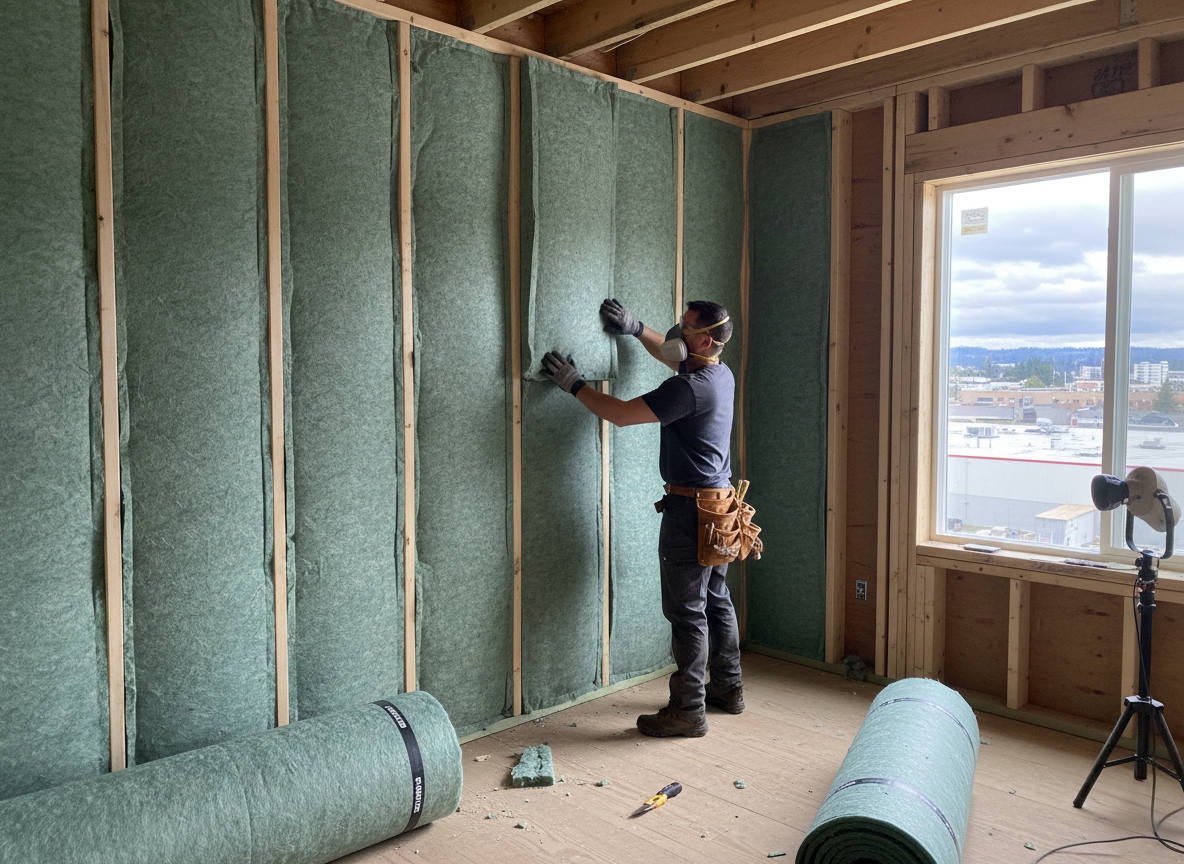
Milwaukie homes built before the 1970s in neighborhoods like Ardenwald and Hector Campbell often feature single-pane windows and thin plaster walls that carry sound from the Willamette River and nearby Portland corridors. Soundproof insulation here requires decoupling layers such as resilient channels combined with mineral wool batts to handle both airborne noise and the moisture that accumulates during mild wet winters. Installers must check for existing vapor barriers because adding mass-loaded vinyl without addressing condensation points near the riverfront can lead to mold growth inside wall cavities.
In Downtown Milwaukie and Island Station, the mix of Craftsman and mid-century homes sits close to rail lines and arterial roads, so effective soundproofing starts with identifying flanking paths through floors and ceilings rather than walls alone. Dense cellulose blown into attics works well for summer heat but must be paired with acoustic caulk at every penetration to block winter wind-driven noise. Crews routinely find knob-and-tube wiring in these older Clackamas County properties, which forces slower, hand-packed installation to avoid code violations.
Edge cases appear when homeowners request soundproofing only in bedrooms while leaving shared walls with neighbors untreated; the result is persistent low-frequency rumble from Portland-bound traffic that travels through the slab. Proper jobs include sealing sill plates and adding mass to interior doors because the region's dry summers create larger temperature swings that expand and contract unsealed gaps. Testing with a decibel meter before and after confirms whether the assembly meets the client's target reduction in river-adjacent homes.
Technician insight
In Milwaukie the thing that catches most people out with soundproof insulation is how the wet winters push moisture into the unvented cavities of 1940s Ardenwald homes right next to the river; if you pack dense material without adding weep paths the walls start holding water and the sound reduction disappears within two seasons.
Island Station Noise Reduction
A homeowner near the riverfront park reported constant low rumble from Portland traffic and trains. Inspection showed open cavities and single-pane windows allowing flanking noise through the floor joists. We decoupled the ceiling, packed mineral wool, and sealed every penetration. Traffic noise dropped enough that the family could sleep with windows cracked during dry summer nights.
How it works
- 1
Site Assessment
Walk-through of the home in the target neighborhood to map noise sources, check wall cavities, and note moisture indicators from winter rains.
- 2
Material Selection
Choose mineral wool, mass-loaded vinyl, or decoupled drywall assemblies based on the house age and proximity to the Willamette River or Portland roads.
- 3
Preparation And Sealing
Remove baseboards, seal all penetrations with acoustic caulk, and protect existing wiring or plumbing found in older Milwaukie stock.
- 4
Installation
Install layers in walls, ceilings, or floors while maintaining ventilation paths to handle the area's wet winters without trapping moisture.
- 5
Verification
Measure post-install sound levels and walk the homeowner through any remaining flanking paths that may need future attention.
Pricing
Cost depends on square footage treated, access difficulty in older homes, and material density required; quotes are provided after the on-site assessment.