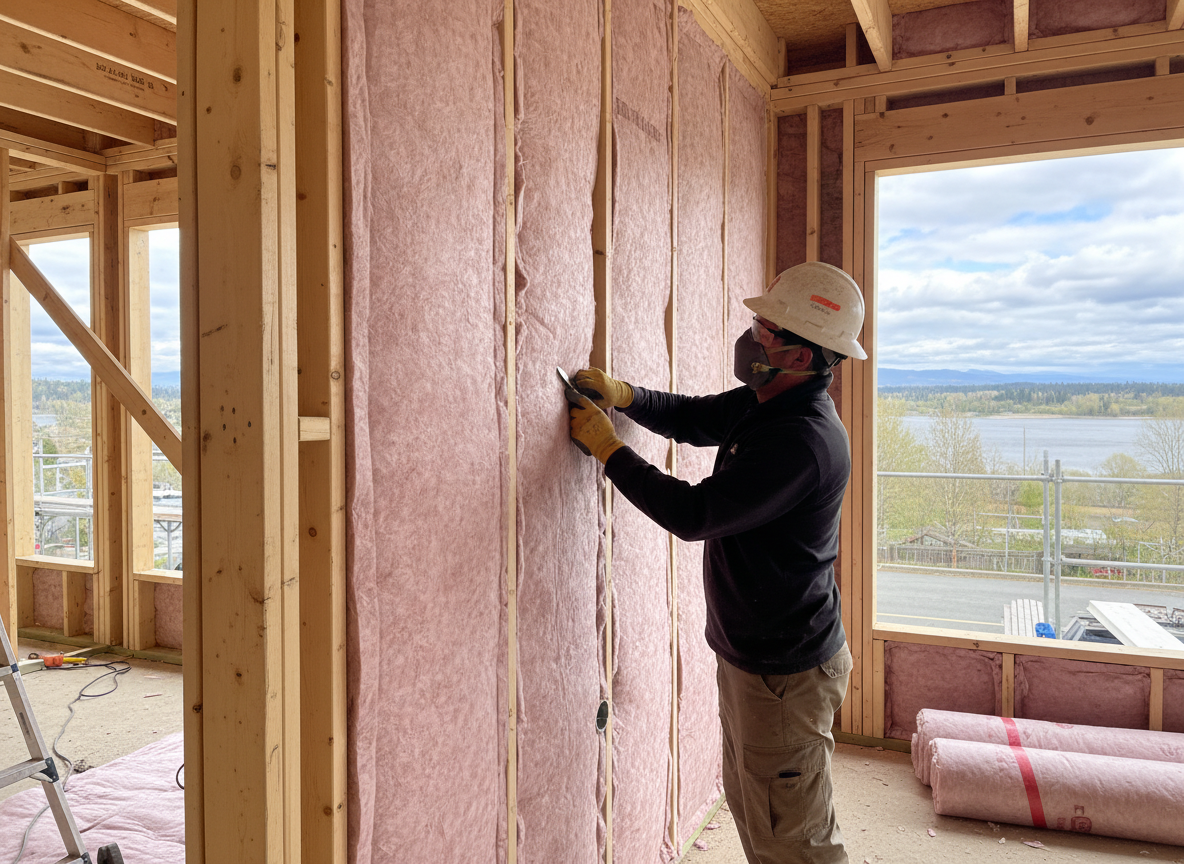
Rockwool batts and blown products perform well in Milwaukie’s mild wet winters because the mineral fiber resists moisture absorption that can degrade fiberglass in older homes around Downtown Milwaukie and Ardenwald. Installers cut the material to fit irregular cavities in 1950s–1970s ranch houses common in Hector Campbell and Island Station, then seal edges with compatible tape to limit air movement from the Willamette River humidity. Proper vapor retarder placement on the interior side prevents condensation that shows up when temperatures swing between winter rain and occasional summer heat.
In Clackamas County, rockwool meets fire-blocking needs around chimneys and electrical penetrations that many pre-1980 homes lack. Crews working from the 4560 SE International Way shop carry pre-sized pieces for quick attic top-offs in neighborhoods where blown cellulose has settled over decades. The material also reduces sound transmission from nearby Portland traffic corridors when installed in interior walls during remodels.
Homeowners in Milwaukie often request rockwool for rim-joist bays above crawl spaces that stay damp from seasonal rain. Installers check for existing mold or water intrusion first, then friction-fit the batts without compressing them so R-value stays consistent. Access through small foundation vents in Island Station homes requires extra care to avoid disturbing insulation already in place.
Code updates in Oregon emphasize continuous insulation layers on new additions; rockwool boards serve this purpose on exterior walls in Ardenwald without adding excessive thickness. Technicians verify that roof ventilation remains adequate after installation so warm dry summers do not trap residual moisture inside the assembly.
Technician insight
In Milwaukie, the thing that catches most people out with rockwool insulation is how older crawl spaces in Island Station and Hector Campbell stay damp year-round from Clackamas County rain. Homeowners try to stuff fiberglass right against the soil side and it fails fast; rockwool needs a small air gap plus a proper vapor retarder or you just move the moisture problem inside the wall.
Attic Upgrade in Ardenwald Home
A 1960s ranch showed settled cellulose and water stains near the ridge after heavy winter rain. Inspection found poor ventilation and no fire blocks around the chimney. Crews removed the old material, installed rockwool baffles and batts with sealed seams, then added ridge vents. The homeowner reported drier attic air the following season.
How it works
- 1
Site Assessment
Walk-through of attics, walls, and crawl spaces in the Milwaukie home to identify moisture issues and existing insulation condition.
- 2
Material Selection
Choose rockwool density and thickness suited to local winter rain exposure and fire separation requirements.
- 3
Preparation
Clear access points, protect finished surfaces, and confirm ventilation paths remain open before cutting begins.
- 4
Installation
Friction-fit or mechanically secure rockwool in cavities, seal seams, and restore access panels.
- 5
Final Check
Verify coverage, airflow, and moisture barriers before leaving the job site.
Pricing
Cost depends on square footage, access difficulty, and whether walls or attics are involved; 24/7 scheduling available for urgent jobs.