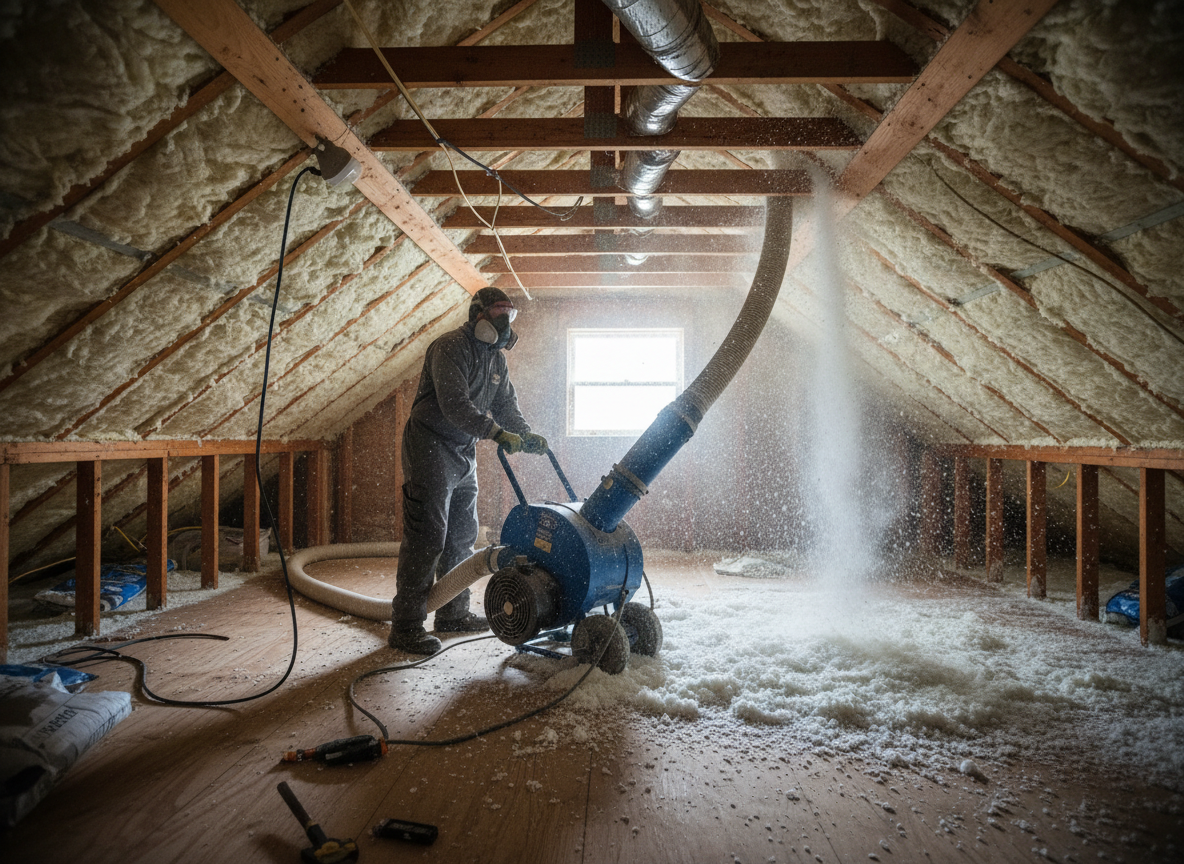
Milwaukie homes built before the 1980s in neighborhoods like Hector Campbell and Ardenwald often have minimal or settled insulation in attics and walls. Wet winters increase the risk of condensation when warm indoor air meets cooler surfaces, so proper vapor retarders and ventilation must be addressed during any upgrade. Crews check for existing knob-and-tube wiring and roof leaks before adding material because those conditions change the approach on the job site.
The shift from warm dry summers to persistent winter rain affects how insulation performs around the Willamette River corridor. Homes near Milwaukie Riverfront Park or the riverfront can experience higher humidity levels that push moisture into wall cavities. Closed-cell spray foam is frequently chosen in these spots because it doubles as an air and moisture barrier while still allowing the structure to dry when needed.
Clackamas County code requires minimum R-values that vary by location in the assembly. In practice this means verifying current insulation depth and type before adding new material so the assembly meets requirements without creating trapped moisture. Technicians also examine crawl spaces common in Island Station homes where soil moisture can migrate upward if vapor barriers are missing or damaged.
Portland’s influence on local building practices shows up in many Milwaukie remodels that added insulation without addressing air sealing first. Gaps around plumbing penetrations and electrical boxes allow conditioned air to escape even when thick batts are present. Addressing these details during the install prevents the need for repeated visits once heating bills arrive.
Technician insight
In Milwaukie the thing that catches most people out with home insulation is older homes in Ardenwald and Hector Campbell that still have single-pane windows and unvented crawl spaces. The wet winters push moisture into those spaces when new insulation is added without first fixing the air leaks and ground vapor barrier, so the job always starts with checking how water moves through the structure rather than just measuring R-value.
Island Station Attic Upgrade
A 1960s home near the Willamette River showed signs of ceiling staining after several wet winters. The assessment found settled fiberglass and blocked soffit vents allowing moist air to reach the sheathing. Crews removed the old material, sealed the penetrations, installed new insulation with proper ventilation channels, and added a vapor barrier in the crawl space. The homeowner reported drier conditions and lower heating use the following winter.
How it works
- 1
Site Assessment
Technicians inspect attics, walls, and crawl spaces in the specific home, noting existing insulation condition, moisture signs, and ventilation paths.
- 2
Material Selection
The crew selects insulation type based on the house age, location in neighborhoods like Downtown Milwaukie, and exposure to winter rain.
- 3
Air Sealing
Gaps around penetrations and framing are sealed before insulation is installed to reduce air movement through the assembly.
- 4
Installation and Final Check
Insulation is placed to the required depth and coverage, followed by a walkthrough to confirm ventilation remains clear and no moisture issues were created.
Pricing
Upfront quotes are provided after an on-site inspection because each Milwaukie home presents different access and existing insulation conditions.