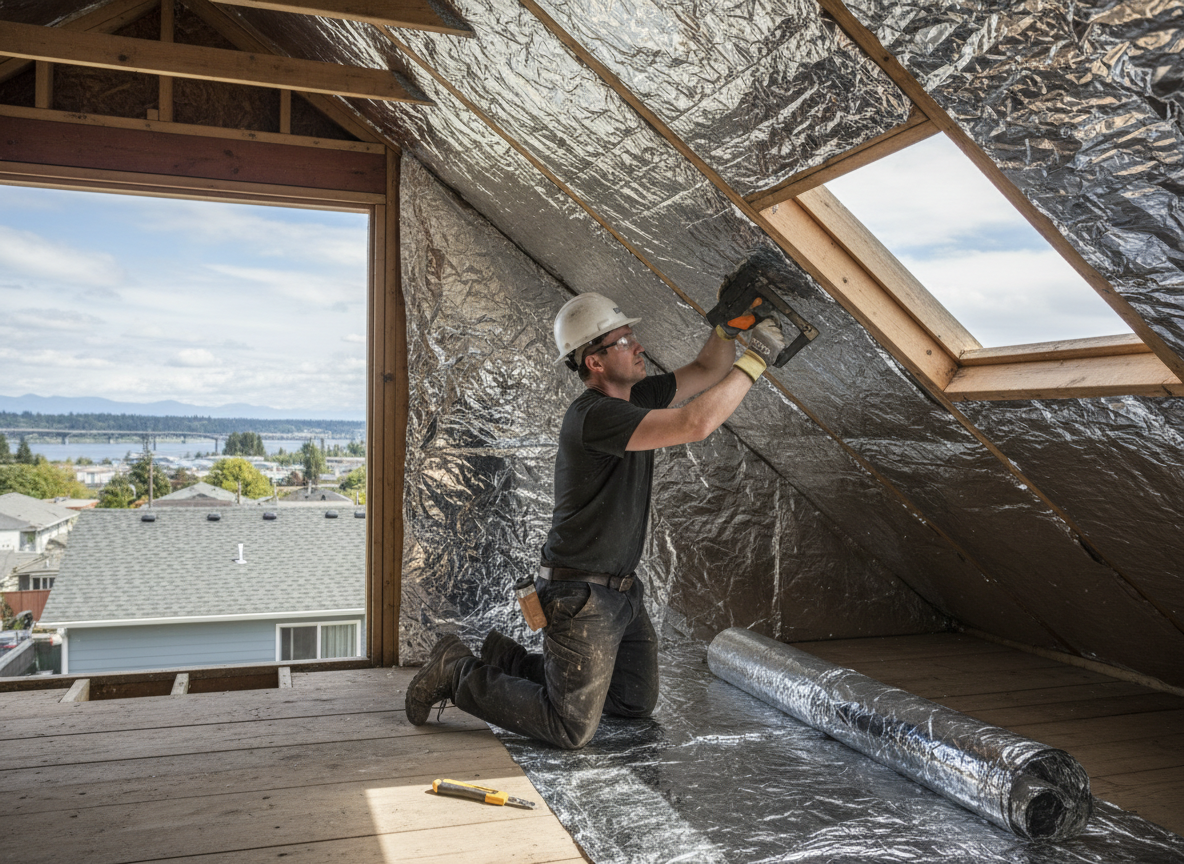
Foil insulation, typically installed as a radiant barrier in attics, performs differently in Milwaukie’s climate of mild wet winters and warm dry summers. In neighborhoods like Ardenwald and Hector Campbell, many homes built before 1970 have vented attics where foil must be stapled to rafters with a minimum one-inch air gap to avoid trapping moisture from winter rains. Without that gap, condensation forms on the underside during long wet periods, leading to mold on roof sheathing. We see this most often in Island Station homes near the Willamette River where humidity stays elevated longer than in inland Portland areas.
Proper installation also requires sealing around recessed lights, plumbing vents, and chimney chases that are common in Clackamas County’s older housing stock. Foil edges must overlap at least six inches and be taped with foil tape rated for high humidity; gaps allow radiant heat to bypass the barrier during summer afternoons when attic temperatures climb above 120 degrees. In Downtown Milwaukie bungalows with low-slope roofs, we often add ridge venting first so the foil can work without creating trapped heat pockets that push warm air into living spaces.
Edge cases include homes with knob-and-tube wiring still present in some Ardenwald properties. We never cover active wiring with foil and instead reroute or replace it before proceeding. Soil conditions near the river also affect crawl-space applications; foil must be installed shiny side down with ground cover to prevent ground moisture from corroding the aluminum over time.
Technician insight
In Milwaukie the thing that catches most people out with foil insulation is skipping the air gap on pre-1960 homes in Ardenwald. Those tight rafter bays trap winter moisture against the sheathing once the foil goes up, and the rot shows up two winters later when the dry summer heat finally pulls it out.
Island Station Attic Retrofit
Homeowner noticed summer heat pushing through the ceiling in their 1950s house near the river. We found blocked soffit vents and existing fiberglass saturated from winter condensation. Installed foil with proper gaps and added ridge vents; attic temperatures dropped noticeably and no further moisture issues appeared the next wet season.
How it works
- 1
Site Assessment
We inspect attic ventilation, existing insulation, and wiring in the specific Milwaukie neighborhood home.
- 2
Moisture Check
Measure humidity levels and check for past water intrusion common after Clackamas County wet winters.
- 3
Material Placement
Staple foil to rafters maintaining required air gap and sealing all penetrations.
- 4
Final Ventilation Balance
Confirm ridge and eave vents remain clear so the radiant barrier works year-round.
Pricing
Cost depends on attic size, access difficulty, and whether additional venting is needed in older Clackamas County homes.