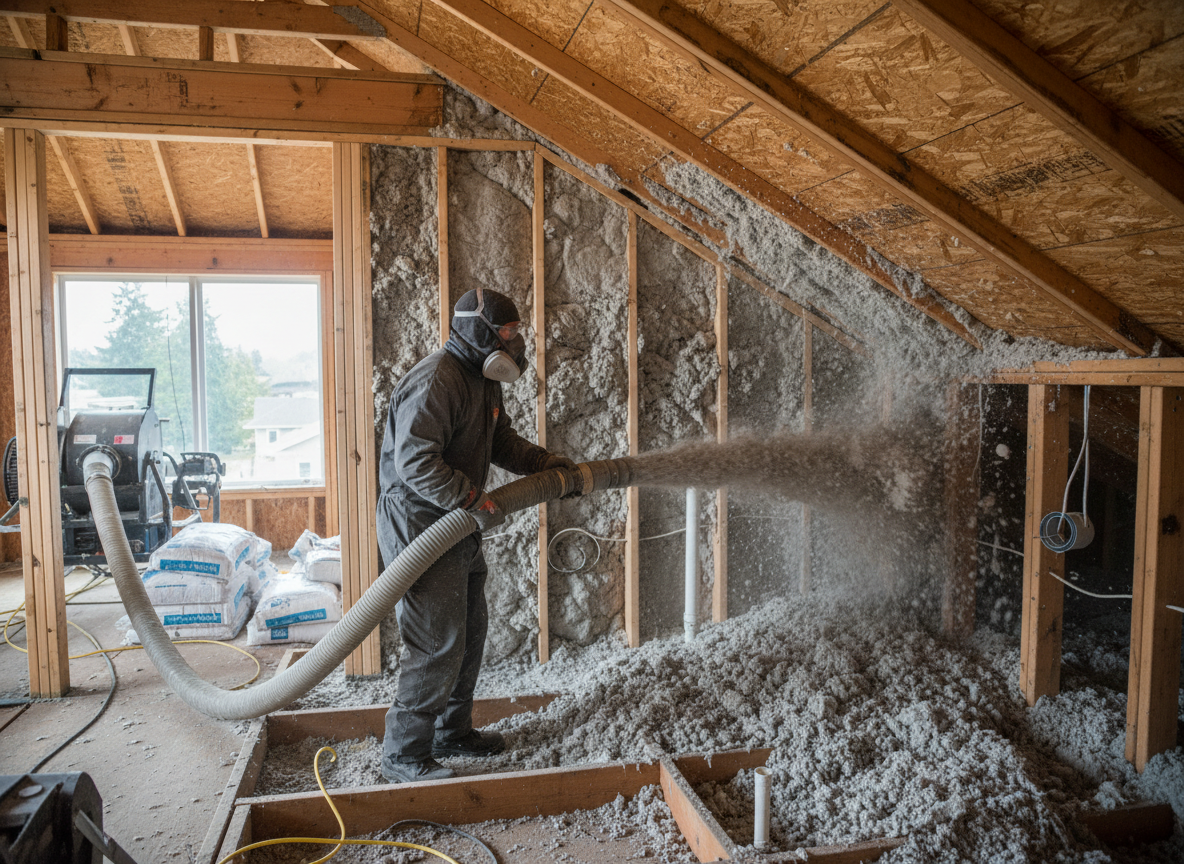
Cellulose insulation performs well in Milwaukie because it settles into irregular cavities common in homes built before the 1970s that line streets in Downtown Milwaukie and Hector Campbell. The material is treated with borates that resist mold growth during the long rainy season when attic temperatures stay cool and relative humidity often exceeds 80 percent. Installers must verify existing ventilation paths along the Willamette River corridor because trapped moisture from the river can degrade roof sheathing if airflow is blocked.
Dense-pack cellulose is the preferred method for two-story homes in Ardenwald where wall cavities have settled over decades and fiberglass batts leave gaps around outlets and window headers. The process requires drilling small access holes from the exterior so siding remains intact while achieving R-values that meet Clackamas County energy codes without over-compressing the material. Crews working near the Milwaukie Museum district routinely encounter knob-and-tube wiring and must maintain the required three-inch clearance before blowing cellulose into those walls.
Blown-in cellulose in attics of Island Station properties must account for the transition from warm dry summers to wet winters that causes rapid temperature swings across the roof plane. Proper baffles and insulation dams around recessed lights prevent airflow short-circuiting that would otherwise reduce performance. Homeowners along SE International Way often request this upgrade after noticing uneven heating bills compared with newer construction across the river in Portland.
Technician insight
In Milwaukie, the thing that catches most people out with cellulose insulation is how the mild wet winters combine with older plaster-and-lath walls in Ardenwald homes to create hidden moisture pockets; if you skip checking for roof leaks near the Willamette before dense-packing, the cellulose can hold water against the framing for months.
Island Station Attic Fill
A 1940s bungalow showed drafts through the ceiling during winter rains. Inspection found settled fiberglass and blocked soffit vents from river humidity. We removed the old material, installed baffles, and blew cellulose to 14-inch settled depth. The homeowners reported steadier indoor temperatures the following season.
How it works
- 1
Site Assessment
Inspect attic and wall cavities for moisture, wiring, and ventilation adequacy in the specific home.
- 2
Material Preparation
Calculate density requirements and stage equipment at the 4560 SE International Way shop before transport.
- 3
Installation
Blow or dense-pack cellulose through access points while maintaining required clearances around fixtures and vents.
- 4
Final Verification
Check settled depth, restore access points, and confirm no airflow paths were compromised.
Pricing
Cost depends on square footage, access difficulty, and whether walls or attics are involved; 24/7 scheduling available for urgent jobs.